ServicesSiding
Siding Repair and Replacement in Spring Lake
We replace cracked, loose and tired siding with panels that are hung correctly, flashed properly and sealed against moisture. Ladders and staging stay secured, the work zone stays roped off, and the yard is swept for nails before we leave.
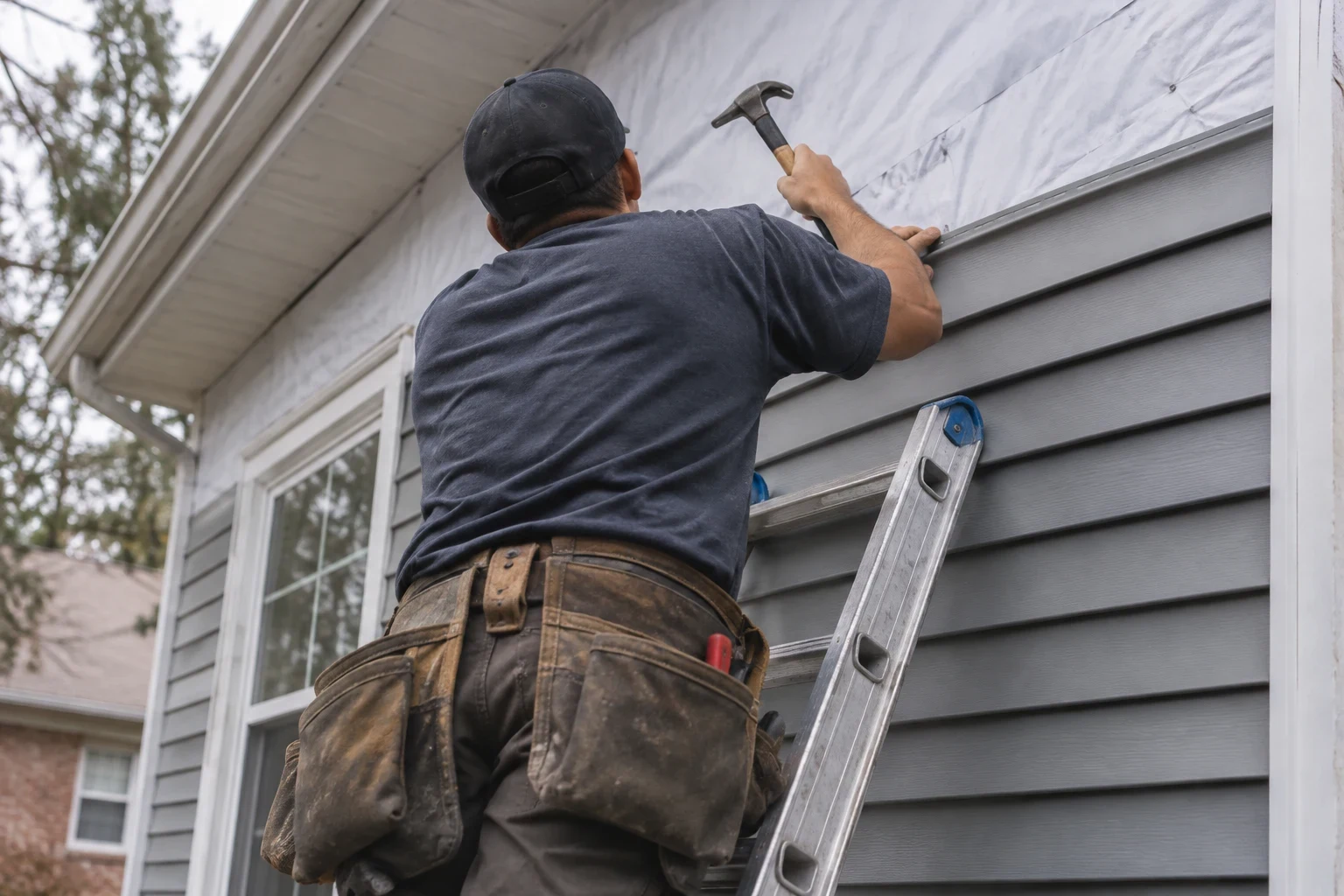
When siding work is the right call
Siding is the outer layer that sheds rain before it reaches the framing of your home. Once a panel splits, bends or comes unlatched, moisture finds the opening and wets the wood beneath it. That kind of damage tends to stay out of sight until it appears as rot, mildew or stained drywall indoors. A handful of damaged pieces can usually be repaired. Replacing everything is the better choice when damage is spread across several walls, faded colors can no longer be matched, or the sheathing itself needs work.
Vinyl is the most common siding we work on around Spring Lake, with fiber cement on some newer homes. Vinyl needs loose fastening so it can move in hot weather, and many of the problems we find trace back to panels that were nailed down too hard. We study how your existing siding was put up before suggesting anything, so the recommendation fits the actual problem and not the largest possible job.
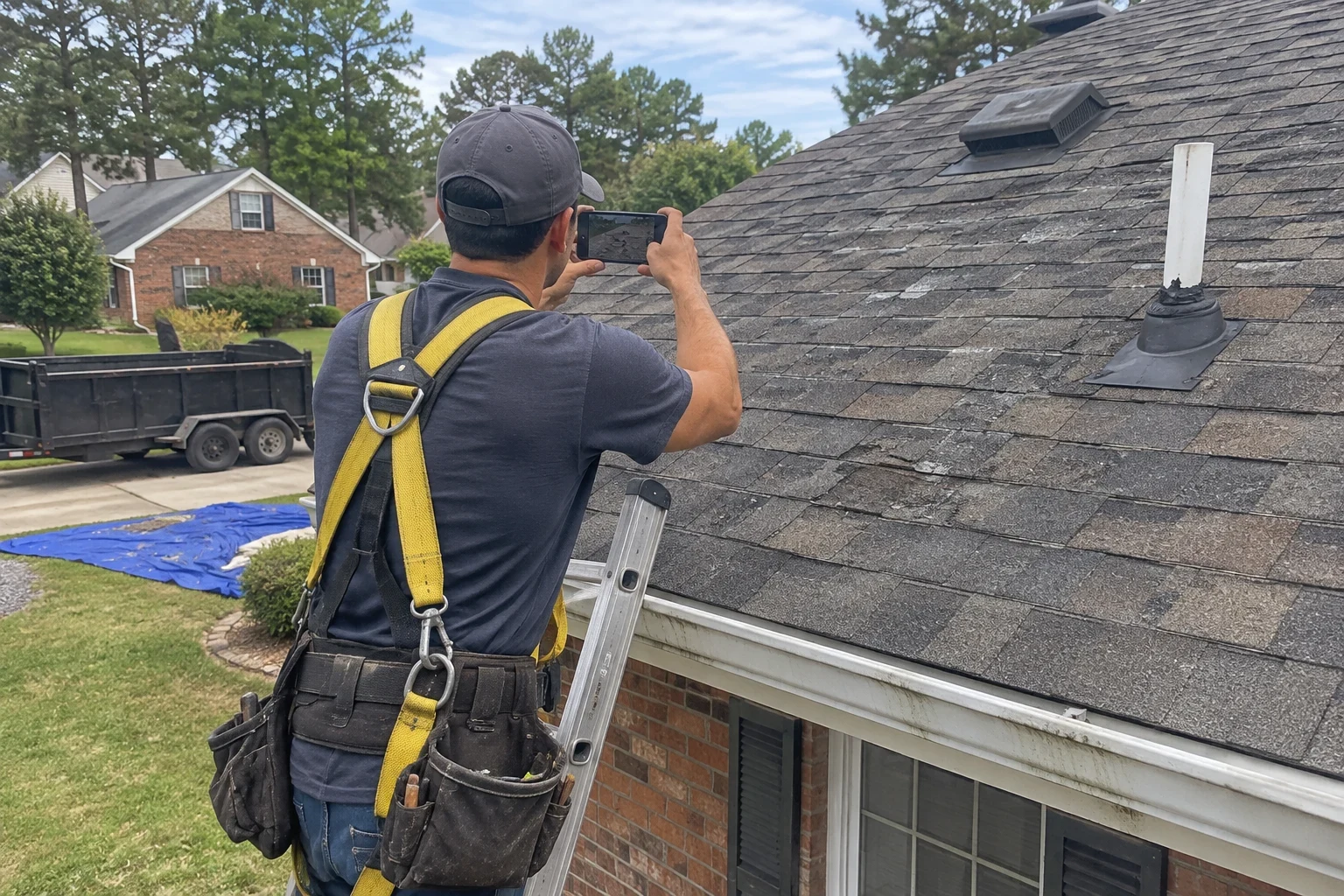
The work that goes into your siding
- 01
Spot repairs with careful matching
Split, cracked or wind-torn pieces are taken out and new ones fitted to the same profile and as close a color as we can find. If the original line has been discontinued, we lay out the choices with you first.
- 02
Complete tear-off and new siding
Old siding comes off down to the sheathing, which we check for rot. New vinyl or fiber cement then goes up with proper fastener placement and gaps that let it expand and contract.
- 03
Weather barrier and flashing
A fresh house wrap is applied before any panel, with flashing around existing openings, at corners and where the wall meets the roof. That hidden layer is what keeps water out of the framing.
- 04
A look at the wall underneath
With the siding removed, any stained or spongy wood gets photographed and shown to you. We do not close up a wall until you have seen it.
- 05
Clean transitions at the roof edge
Soffit, fascia and trim need to meet the roofline and gutters neatly. We plan the siding alongside our gutters and roof repair work so runoff moves away from the wall.
Questions about Siding?
Call(910) 812-8598Signs your siding needs attention
Panels loose after a storm
Strong wind from tropical systems can unlock vinyl panels and leave them flapping or missing. An open seam lets wind-driven rain straight into the wall.
Warping or buckling
Wavy panels usually mean they were nailed too tight and cannot move with the heat. They tend to get worse each summer.
Cracks and holes
Hail, mower debris and cold snaps can crack vinyl. Even a small hole can let in water and insects.
Mildew or stains that keep returning
Green or black growth that comes back quickly can point to moisture trapped behind the siding, not just humid weather on the surface.
Soft spots or musty rooms
If a wall feels spongy when pressed or a room smells damp, the sheathing behind the siding may be wet and needs to be looked at soon.
How a siding job runs
- 1
Free inspection and photo report
We look over the exterior, including the roof edge and gutters, and send you photos of what we found. A written estimate follows, with each recommended item on its own line.
- 2
Preparing a safe work area
The first morning, we tape off the work zone, cover plants and walkways with drop cloths, and lock down every ladder and staging plank. We will ask that children and pets stay away from that side of the house until the day's work is done.
- 3
Removal and wall inspection
We strip and re-cover the house in sections, so only a small area is exposed at any time. If sheathing is damaged, you see it first, and it is replaced before the next section is opened.
- 4
New siding and final cleanup
House wrap, flashing and panels go up, then trim is fitted and sealed. Before leaving, we pull a magnetic sweeper across the yard and driveway and haul off every scrap.
What shapes the price of a siding job
Two things drive most siding estimates: how much wall there is to cover and the condition of the wood behind the old panels. We break the estimate into separate lines so each charge is easy to follow. For storm damage, we can join your adjuster meetings and support you during the insurance claim, and financing is available through Acorn Finance.
- Square footage and wall height
- Larger walls take more panels and more hours. Second-story walls call for staging and added fall protection, and that setup time shows up in the estimate.
- Vinyl or fiber cement
- The two materials cut, weigh and fasten differently. Fiber cement boards are heavy and produce fine dust when cut, so they take longer to handle and install safely.
- What the sheathing looks like
- Any soft or rotted wood under the old siding must be replaced before new material goes up. Its full extent only shows once the panels come off, so we photograph it and review it with you before adding anything.
- Corners, gables and trim
- Each corner, gable peak and opening needs its own cuts and flashing. A plain, uninterrupted wall costs less per foot than one broken up by many details.
Common siding questions
Can a few bad panels be replaced without redoing the whole wall?
Often, yes. Vinyl locks together in rows, so a damaged piece can be released and swapped while the neighboring panels stay in place. Color is the tricky part, since older siding fades over time. We will give you a straight opinion on how noticeable the new piece will be before you choose.
Can my family stay home while you work?
Yes. The side of the house we are working on is taped off, and we ask that kids and pets stay out of that area. Please keep doors on that wall closed while material and tools are moving above them.
Will my insurance cover siding damaged in a storm?
It comes down to the wording of your policy and the cause of the damage. We photograph every damaged panel and section of wall, and we can meet your adjuster at your home to walk through what we found. We will also help you with the paperwork and each step of the claim. Whether the damage is covered, and for how much, is decided by your insurer, not by us.
What is the usual timeline for a full replacement?
For most single-family homes, plan on a few working days. Size, wall height and the amount of sheathing that needs replacing all affect the schedule. Rain may pause work, but no wall is left overnight without its weather barrier on.
Should the roof be looked at too?
We recommend it. Water spilling off the roof edge or out of clogged gutters is a common reason siding fails. Our inspection includes the roof, so new siding is not undermined by a leak higher up.
See what is behind your siding
We will look over your siding and roof edge, photograph what we find, and explain your options without pressure.