ServicesCommercial Roofing
Commercial Roofing in Spring Lake
We repair and replace low-slope roofs on existing business buildings: offices, shops, churches and small warehouses. Our crews set up fall protection and keep work zones away from your doors, so staff and customers stay safe while the roof gets fixed.
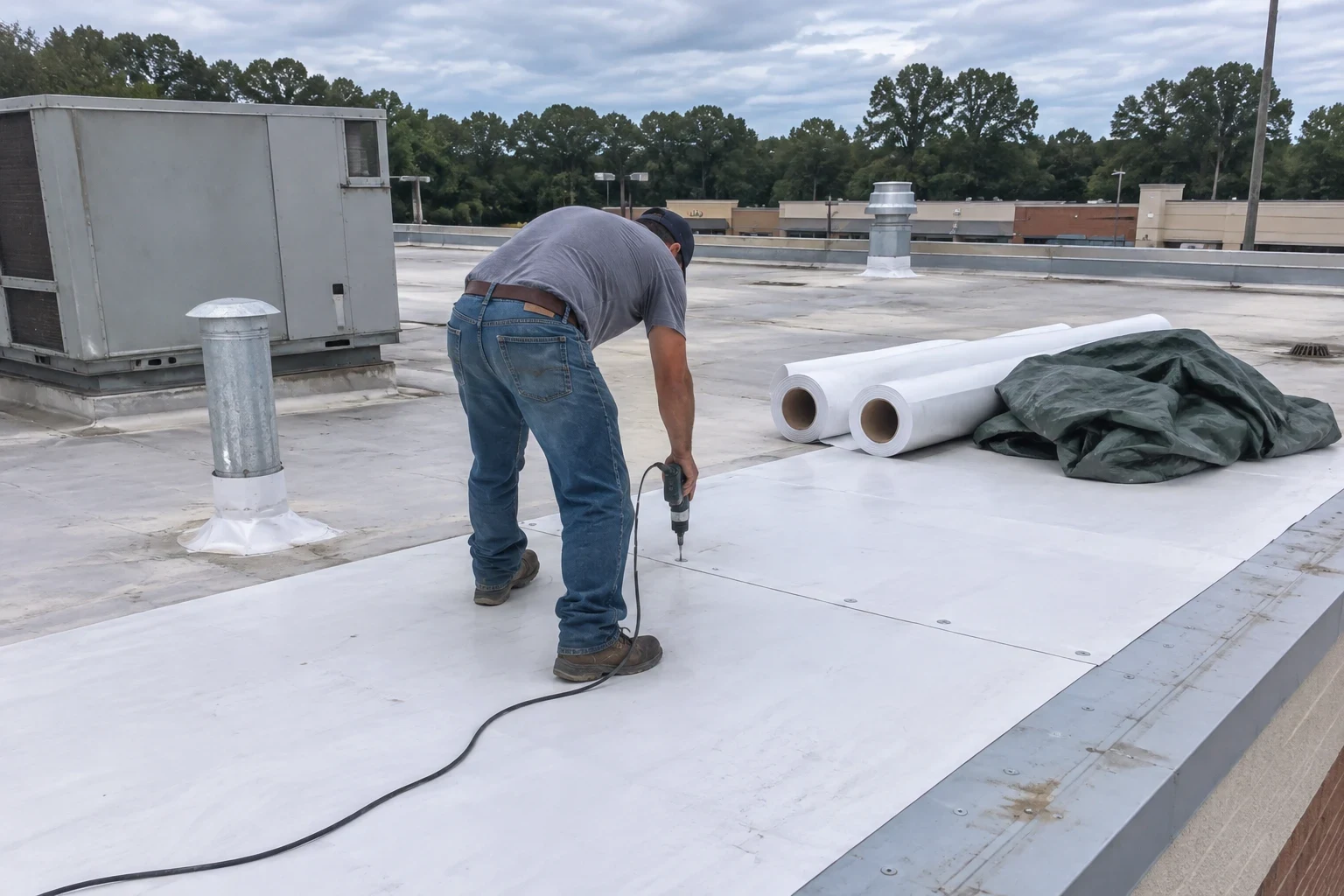
Roofing for buildings that stay open during the work
Most business buildings sit under a low-slope roof rather than steep shingles. The covering is usually a single-ply membrane such as TPO or EPDM, modified bitumen or standing seam metal. Rain drains slowly off a nearly flat surface, so a small gap at a seam, drain or flashing can let water travel under the membrane and drip through a ceiling well away from where it got in.
These jobs also happen above people who are still at work. Staff and customers keep coming and going, so we decide on edge protection, the spot where materials go up and a safe path through the parking lot before anyone climbs a ladder. The safety of the crew overhead and the people below is planned together from the start.
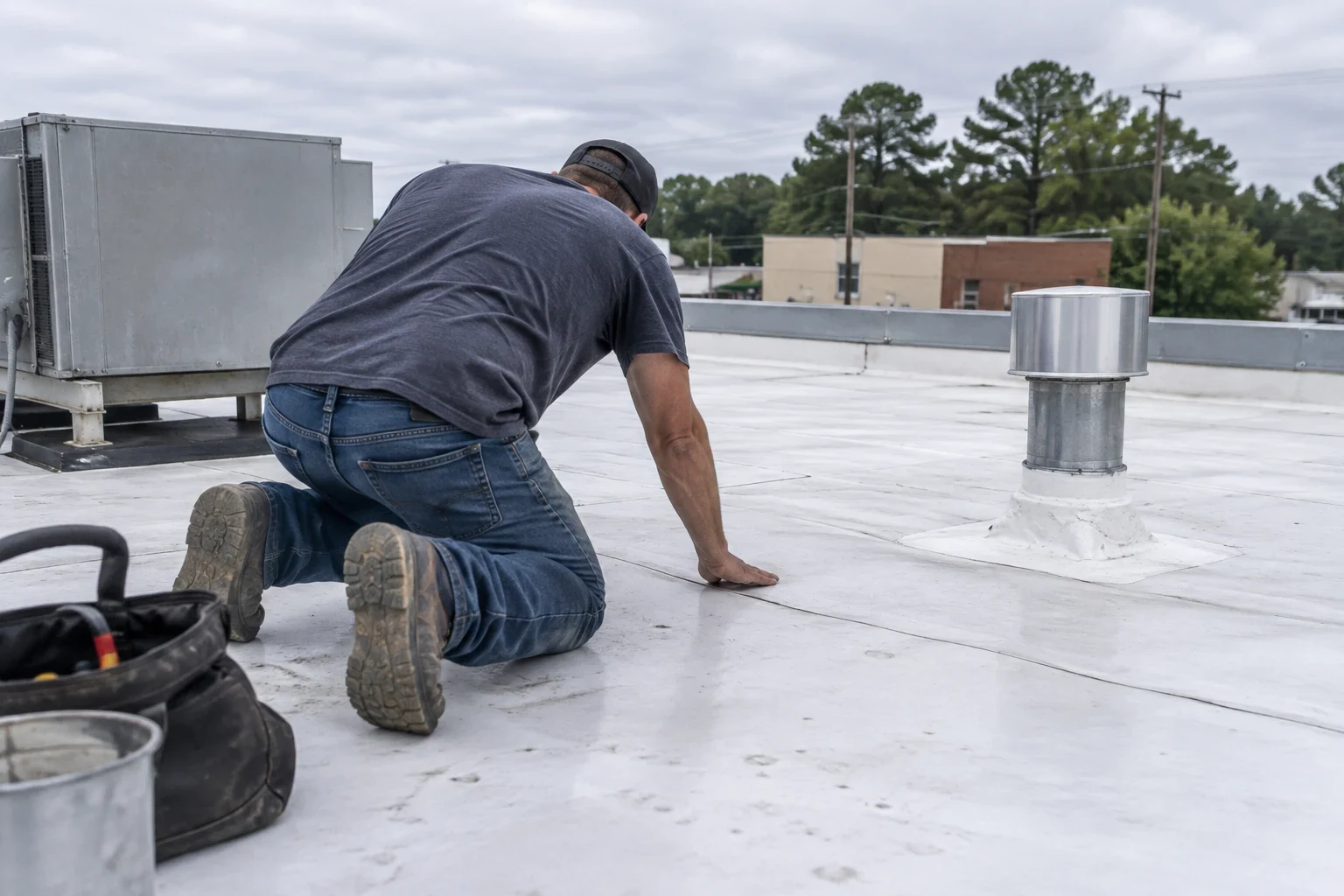
When you don't yet know what the roof needs, a free inspection is the sensible first step. We cover the entire surface, look closely at drains and penetrations and send you a photo report of everything we found.
Commercial roof work we handle
- Seam and membrane patching
- Damaged TPO, EPDM and modified bitumen is cleaned, primed and patched with material that matches the existing system. Seams that have pulled apart are heat-welded or adhered again rather than hidden under a coat of sealer.
- Flashing around rooftop units
- Leaks most often start where HVAC curbs, vents and pipes pass through the roof. We rebuild that flashing properly so the joint is not depending on a bead of caulk.
- Drains, scuppers and perimeter metal
- A clogged drain holds water on the roof, and loose edge metal gives wind a grip on the membrane. We clear and reseal drains, fasten the edge metal and confirm water is leaving the roof.
- Complete roof replacement
- When the membrane is worn out or the insulation beneath it is wet, we tear off the old system and install a new one section by section. Any area opened during the day is closed and watertight before the crew leaves.
- Roof inspections and photo reports
- We check the open field, the edges and every penetration. The photos come with short, plain notes you can use for budgeting or for a conversation with your insurer.
When a low-slope roof is asking for help
Stained ceiling tiles
Brown rings on drop-ceiling tiles usually mean a slow leak. The actual opening in the roof is often well away from the stained tile.
Ponding that lingers after rain
Standing water that is still there a couple of days after a storm adds weight and keeps the membrane soaked, which shortens its life. The cause is usually a clogged drain or a sag in the deck.
Bubbles or soft spots underfoot
Blisters in the membrane, or insulation that gives when you step on it, mean moisture is trapped below. It needs to be found before it travels further.
Seams lifting after wind
Summer thunderstorms and the gusts from tropical systems pull at weak edges and seams. Once air gets underneath, every gust works the seam open a little more.
Cracked sealant at equipment
Dried, split sealant around HVAC curbs and pipes is an early warning. Caught at this stage, it remains a small repair.
What shapes the price of a commercial roof job
We price each building only after we have been up on its roof, and you get a written quote with every line item before any work begins. Four things explain most of the gap between one building's number and another's.
Roof area and system type
Square footage sets the baseline. TPO, EPDM, modified bitumen and metal each carry their own material cost and their own pace of installation.
What sits under the membrane
Wet insulation or a rusted deck has to come out and be replaced before a new surface goes down. We pull core samples and photograph doubtful spots so the scope is fixed before you see a quote.
Rooftop equipment and penetrations
Each HVAC curb, skylight and vent needs its own flashing detail. A clear, open roof moves faster than one crossed by a dozen units and runs of pipe.
Height, access and site protection
Tall walls, parapets, tight parking lots and a storefront that stays open all change our setup. Guardrails, lifts and covered walkways are priced into the first quote, not added on later.
What happens on a commercial roofing job
- 1
A free look at the roof, with photos
We walk the whole surface, photograph each trouble spot and give you a straight answer on whether a repair will hold or the system needs replacing. You then receive a written scope with every task broken out on its own line.
- 2
Agreeing on access and safety
We work out with you where the ladder or lift goes, where materials are stored and which entrances stay open. Open edges get warning lines or guardrails, and the area under any lift is closed off.
- 3
Working in closable sections
The crew tears off only as much as it can seal before quitting time. Where the job allows, loud or strong-smelling steps are scheduled around your busiest hours.
- 4
Cleanup and a walk-through together
We clear the roof and the ground around the building of screws and scraps, flush the drains with water and walk the finished roof with you. You keep the closing photos for your records.
Questions about commercial roofing
Can my business stay open while you work on the roof?
In most cases, yes. We stage materials away from your entrances, rope off the ground beneath any lift and keep a clear path for customers. Noisy steps or ones that carry an odor can be shifted to a quieter part of your day.
How can I tell whether my flat roof needs a repair or a new system?
If the membrane is mostly sound and the insulation under it is dry, a repair can often keep the roof working for years. When leaks show up in many places or large areas of insulation are holding water, a new system is the better use of your money. The photos from our inspection make it clear which situation you are in.
What kinds of commercial roofs do you work on?
We work on flat and low-slope roofs covered in TPO, EPDM, modified bitumen or standing seam metal on existing buildings such as offices, retail spaces, churches and small warehouses. We also look after the gutters and downspouts on those buildings.
If a storm damages the roof, will you help with the insurance claim?
Yes. We can meet your adjuster on the roof and support you through the claim with photos and a clear written list of the damage. The insurer decides what is covered; our job is making sure the documentation is complete.
How do your crews stay safe on a roof that looks flat?
A low-slope roof feels easy to walk, which is exactly why falls tend to happen at the edge. Our crews work behind warning lines or guardrails at open edges, cover every skylight and keep cords and loose material picked up as they go.
Find out what your building's roof needs
We will walk the roof, check every drain and penetration and send you a photo report of what we find. Serving Spring Lake, Fayetteville, Hope Mills and nearby towns.