ServicesRoof Repair
Roof Repair in Spring Lake
A leak rarely starts where the stain shows up. We trace water back to its real entry point, repair it with materials that match your roof, and work tied off and organized so your home and family stay out of harm's way while we do it.
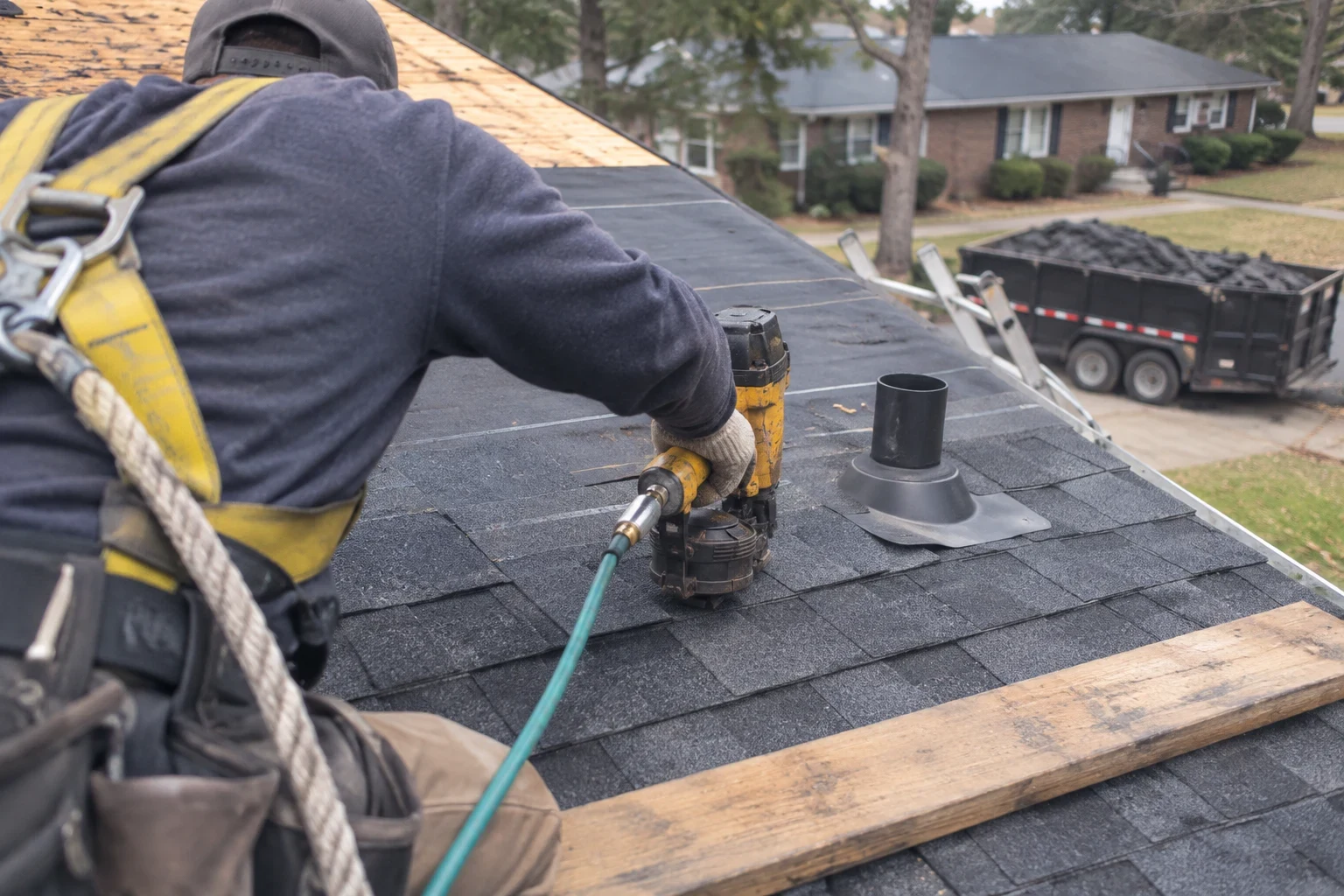
Is a repair enough for your roof
A leaking roof usually has one weak spot, not a failing system. A split rubber collar on a plumbing vent, a handful of tabs peeled back by a summer storm or flashing that has worked loose along a chimney can each let water into your home, and each can be fixed on its own when it is found early.
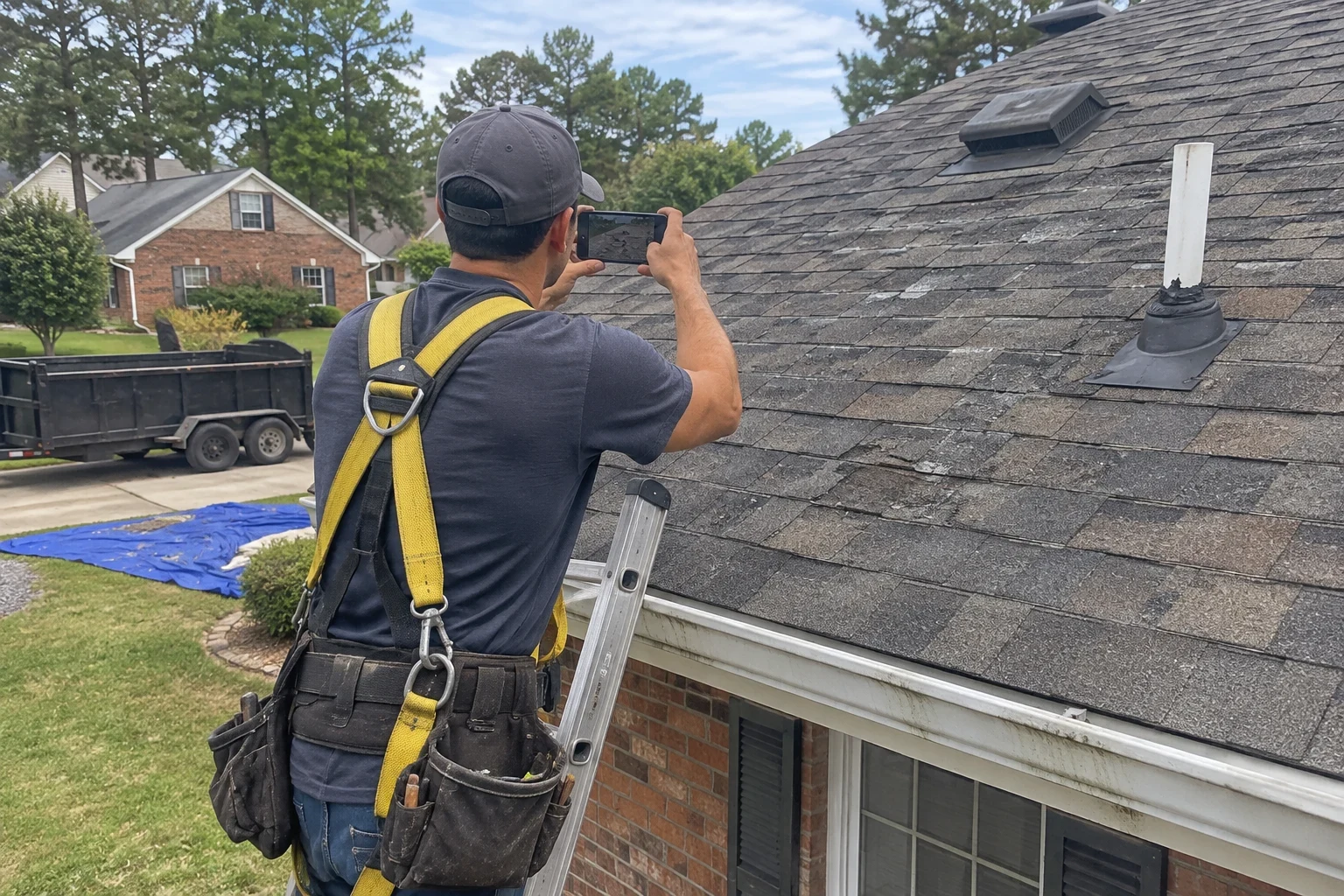
Our first job is diagnosis. We go into the attic to look for darkened sheathing and damp insulation, then go up on the roof and line those clues up with what is happening on the surface. You receive photos from both sides along with a clear opinion on whether a repair will last or whether the roof is running out of years.
When replacement is the better value, we lay out the reasons and show you what we saw. When a repair will hold up well, that is the recommendation you get.
What our roof repair work includes
- Finding the true source
- We follow a ceiling mark up into the attic and then out to the roof surface. Water often travels along a rafter for several feet before it drops, so we locate the entry point before any material comes off.
- Replacing damaged shingles
- Creased, torn or missing shingles are lifted out gently so the neighboring courses do not crack. We source the nearest shape and shade still being made and check that every new tab seals down properly.
- Flashing and vent collars
- Step flashing, chimney counterflashing and rubber vent collars wear out sooner than shingles. We replace worn pieces rather than covering them with caulk, which on its own tends to crack within a season or two.
- Soft or rotted decking
- Where moisture has weakened the plywood or OSB, we cut that section out and install new sheathing. Shingling over soft wood leaves a hidden weak spot that is unsafe to stand on later.
- Ridge caps and attic vents
- Loose ridge caps, cracked box vents and worn turbine vents are fastened down or replaced so your attic keeps breathing while rain stays out.
Warning signs that call for a roof repair
Water marks or dripping
Tan rings on the ceiling, blistered paint or drops falling in a hard rain mean water is getting past the roof. Catching it early saves decking and insulation.
Shingle pieces in the yard
Bits of shingle on the lawn after high wind, or tabs flipped back on the roof, show the adhesive strip has failed. Once nail lines are exposed, leaks follow fast.
Grit collecting in gutters
Thick piles of granules in the gutters or at the end of a downspout point to shingles wearing thin, usually on the slope that takes the most sun.
A damp or musty attic
Soaked insulation, dark streaks under the sheathing or rust on nail points tell you moisture is getting in, from a leak or from weak ventilation.
Openings at chimneys and vents
Watch for cracked sealant, raised metal or a torn rubber collar around plumbing stacks. Small gaps like these cause many of the leaks we repair.
What moves the price of a roof repair
We price a repair only after seeing both the roof and the attic, since the damage you can see is often only part of it. Your written estimate separates the work into individual lines, so you can follow where each cost comes from. If paying over time suits you better, financing is available through Acorn Finance.
How much is damaged, and where
Swapping one cracked vent collar is a short job. Water entering along a valley or around a chimney takes more material and slower, more careful flashing work.
Pitch, height and access
A steep or two-story roof needs harnesses, anchors and more time spent setting up safely before any repair begins. Tight side yards, landscaping and power lines near the eave can also change how we stage ladders and catch debris.
What we find under the shingles
Sound decking keeps a repair simple. If the plywood or OSB has gone soft, those sections are cut out and replaced, and we show you photos before that line is added.
Shingle type and availability
Standard architectural shingles are easy to source. Discontinued styles, specialty profiles or metal trim pieces can take extra effort to find or fabricate.
What happens on repair day
- 1
Inspection and photos
We look over the attic and the roof, then go through the photos with you. Your written estimate breaks the job into separate lines so each cost is easy to follow.
- 2
A safe setup
Ladders go on solid, level footing and are secured at the eave. On steeper roofs our crew wears harnesses clipped to roof anchors. We also cordon off the ground below so children, pets and vehicles stay away from anything that falls.
- 3
Making the repair
Damaged material comes off, the decking beneath is checked, and the area is rebuilt with new underlayment, flashing and shingles. We stay off wet roofs and do not work in strong wind, so if the weather changes we move the date instead of hurrying.
- 4
Cleanup and final review
Torn-off shingles and old nails go directly into a bin or trailer, and a rolling magnet passes over the grass, flower beds and drive to catch stray fasteners. We finish by showing you before and after photos of the work.
Common questions about roof repair
How can I tell whether my roof needs a repair or a replacement?
It comes down to how far the damage reaches and how much life the rest of the roof has left. When the problem sits in one area and the surrounding shingles still bend without cracking and hold their granules, a repair usually makes sense. If shingles are brittle across several slopes or leaks keep showing up in new places, we will explain why Roof Replacement may be the better value. You see the photos and you decide.
Will new shingles blend in with my existing roof?
We pick the nearest style and color that manufacturers still produce. New shingles often look a little brighter beside weathered ones at first, and that difference usually softens after a season or two outdoors.
Will homeowners insurance pay for the repair?
Coverage depends on the cause. Sudden events like wind, hail or a fallen limb are often covered, while slow wear and age usually are not. We offer adjuster meetings and help through the insurance claim process, and our photos give the adjuster a clear record of the damage. If weather caused the problem, our Storm Damage Repair page goes into more detail.
Does someone need to be home while you work?
Not always. If we can reach the roof and you have approved the estimate, we can go ahead. Many people like to be there at the end so we can look through the photos together. We do ask that pets stay indoors and cars are parked away from the work area.
Is it all right to wait on a small leak?
Small leaks seldom stay small. Water soaks into the decking and insulation long before a stain reaches the ceiling, so waiting can turn a quick fix into sheathing replacement or mold cleanup. A free roof inspection tells you how urgent the problem really is.
Get a clear answer on that leak
One visit covers the attic and the roof, with photos of everything we find and an honest view of whether a repair will do the job. We work across Spring Lake and the surrounding area.