ServicesRoof Inspections
Roof Inspections in Spring Lake
We inspect your roof from the shingles down to the attic decking, work safely on every pitch, and hand you a photo report of what we found. You get a clear picture of your roof's condition and an honest answer on whether anything needs doing.
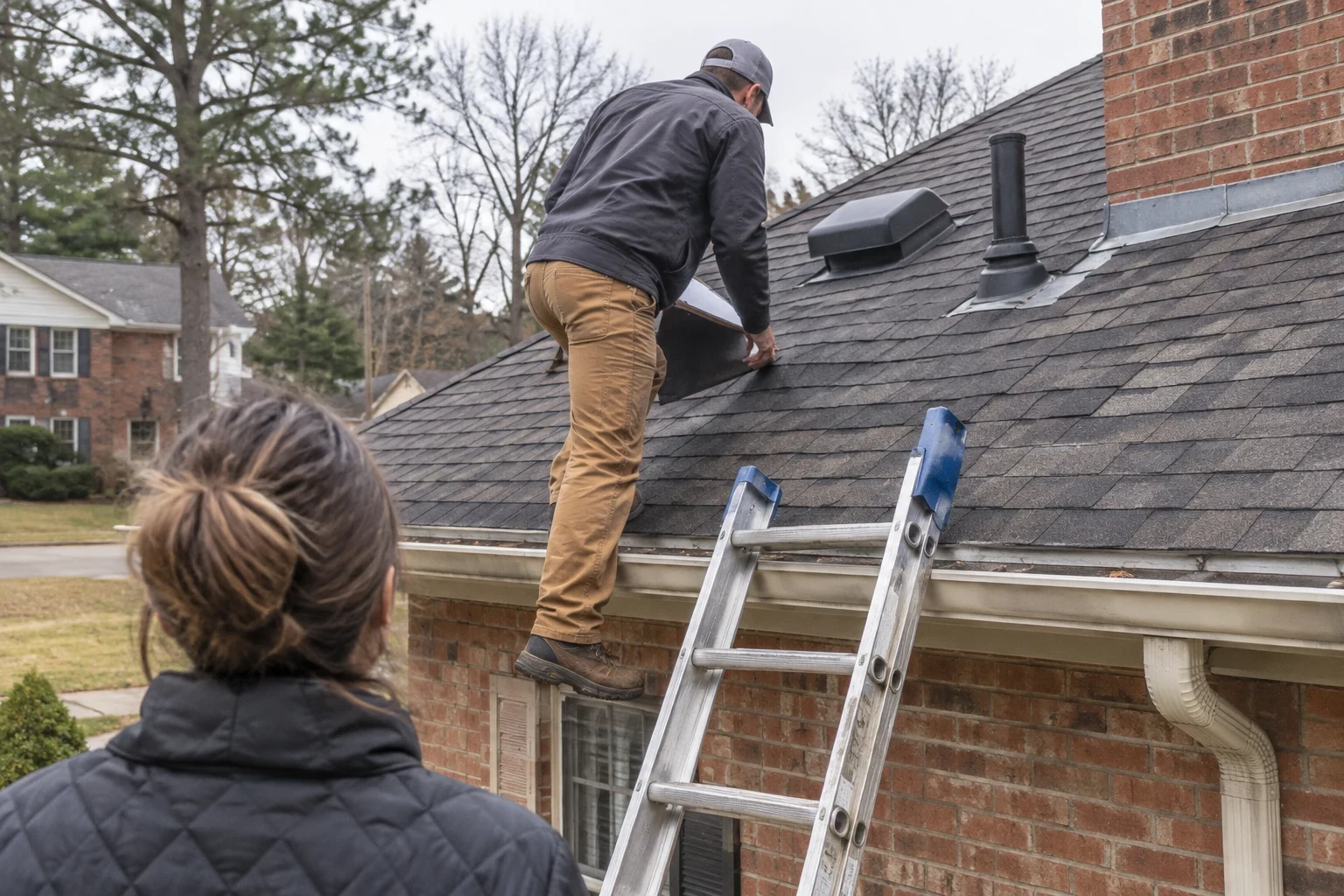
A careful look before small problems grow
A roof inspection tells you where your roof stands today: how much life the shingles have left, whether the flashing is holding, and whether water is getting in where you cannot see it. Most roof leaks start small, at a cracked pipe boot or a lifted shingle, and spread quietly into the decking and insulation for months before a stain shows on a ceiling.
Our inspection is free, and it is not a sales visit. If the roof is sound, we tell you so. If it needs a minor fix, we say that instead of pointing you toward a new roof.
We treat the inspection as roofing work, with the same safety habits we use on a full tear-off. That means a stabilized ladder, fall protection on steeper pitches, and no walking on surfaces that are wet, brittle or soft underfoot.
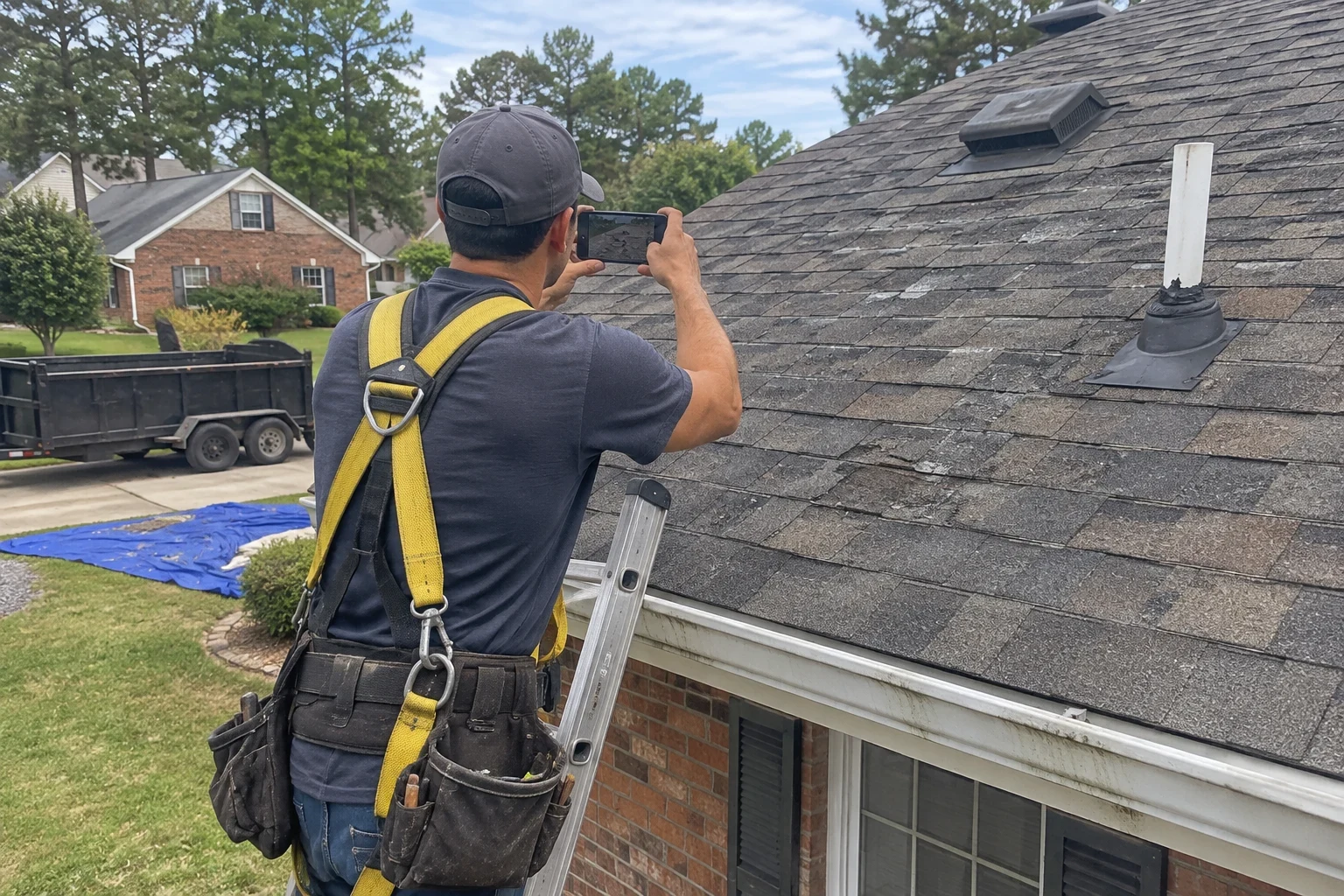
What we check during a roof inspection
- 01
The shingles themselves
We look for bald patches where granules have worn off, along with cracks, curled edges, blisters and shingles that have shifted or lifted. Grit collecting in the gutters is usually the earliest hint that asphalt shingles are thinning.
- 02
Flashing and roof openings
Leaks most often start where something passes through the roof or meets a wall: chimneys, skylights, vent pipes and sidewalls. We examine the sealant, the step flashing and the rubber collars around vent pipes, which harden and split as they age in the heat.
- 03
Attic and roof deck
If you are comfortable with it, we head into the attic to check for pinholes of light, wet sheathing, water marks and mold. We also confirm that air is moving in at the eaves and out near the ridge, because a hot, stale attic wears shingles out early.
- 04
Gutters and runoff
We note gutters that are packed with debris or pulling away, loose hangers, and downspouts that empty right beside the foundation. Fallen pine needles and leaves are a frequent cause of overflow in this area.
- 05
Your photo report
Each issue we spot gets a photo and a short, plain explanation. You see the same things we saw on the roof while staying safely on the ground.
Questions about Roof Inspections?
Call(910) 812-8598When your roof is due for an inspection
Marks on a ceiling or wall
A brown ring or paint that has started to bubble is a sign that moisture has been seeping in for some time. On the roof, the actual entry point is often a few feet uphill from the mark.
A hard wind or hailstorm
Storms can loosen or dent shingles in ways you cannot see from the yard. Having the roof checked creates a record of its condition in case you file a claim later.
Grit washing out of downspouts
When granules pour out with every rain, the coating that shields your shingles from the sun is breaking down.
A roof older than 15 years
Asphalt shingles commonly begin to wear noticeably around this age. Learning where yours stands lets you plan any repair or replacement when it suits you.
A home purchase or sale
A roof-only inspection looks closer than a general home inspection does, so buyer and seller both know the real condition.
A dipping roofline or spongy spots
A ridge that sags or decking that bends underfoot can mean rot below the shingles. Keep off that part of the roof and let us assess it from a secure position.
How your inspection visit runs
- 1
A quick phone call
Tell us what caught your attention and we agree on a convenient time. We also ask roughly when the roof went on and whether anyone has patched it since, so we arrive prepared.
- 2
Setting up safely
When we arrive, we circle the house to spot overhead lines, pets and delicate beds, then plant the ladder on solid, even footing. Before stepping onto a steep or tall roof, we clip in to fall protection.
- 3
Up top, then inside
We move across the roof one section at a time and finish with the attic. If the surface is slick or too damaged to stand on, we inspect from the ladder and the yard and explain the reason.
- 4
Reviewing what we saw
We sit down with you and talk through each finding while you are still with us. The photos and notes are yours to keep, with our straight opinion on which items can wait and which should be handled soon.
What moves the price if your roof needs work
You pay nothing for us to look. When we do find a problem, the cost comes down to what that problem is, and we write out each item for you before any work goes on the calendar. For bigger projects, financing is available through Acorn Finance.
- A fix or a full roof
- Replacing a split pipe boot or a handful of missing shingles is modest work. When wear or rot runs across most of the roof, roof replacement often makes more sense than patching.
- What the decking looks like
- Soft or water-stained plywood must come out before any new shingles are fastened down. Some of that damage only shows once the old layers are stripped, and we say so before you agree to anything.
- Steepness and reach
- A high, steep roof calls for more fall protection and slower, more deliberate work. That extra setup time is part of the labor cost.
- Shingle choice
- Matching what is already on your home or switching to another product changes the material line. We lay out the options side by side and explain how each holds up.
Questions about roof inspections
Do you charge anything for the inspection?
No. The visit and the photo report cost you nothing. Hiring us for any repair afterward is entirely your choice.
How much time should I set aside?
Plan on roughly an hour, attic included. A large roof or one with many valleys and dormers can run longer, and we mention that when we book the visit.
Does someone need to be at home?
It helps, because the attic check happens from inside and we like to show you the findings face to face. If you cannot be there, we can look over the exterior and review the photos with you on the phone afterward.
What if my roof is too worn to walk on?
We step only where the surface will hold us. Brittle shingles or decking that gives underfoot mean we stay off that area and look from the ladder instead. Putting a foot through a weak section would make the damage far worse.
Will an inspection support my insurance claim?
Yes, it can. Photos taken soon after a storm give the insurer a clear, dated record of the damage. We can meet the adjuster at your home when they come out and walk you through the claim from start to finish, which our storm damage repair page explains in more detail.
Know what is happening on your roof
A short visit gives you photos, plain answers and no pressure. We will set a time that works around your day.